Address
304 North Cardinal St.
Dorchester Center, MA 02124
Work Hours
Monday to Friday: 7AM - 7PM
Weekend: 10AM - 5PM

Address
304 North Cardinal St.
Dorchester Center, MA 02124
Work Hours
Monday to Friday: 7AM - 7PM
Weekend: 10AM - 5PM

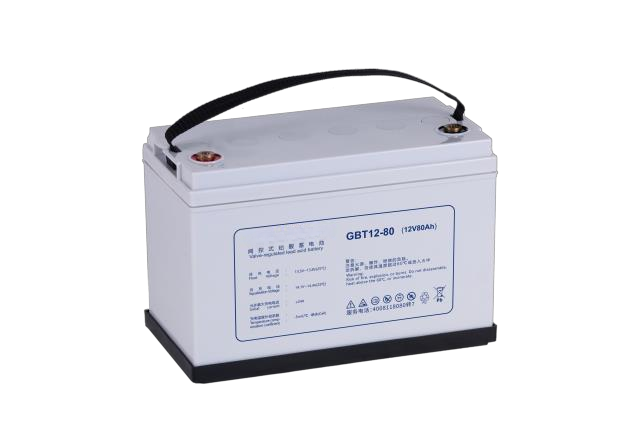
What is a VRLA battery? How does it differ from a standard lead-acid battery?
VRLA = Valve-Regulated Lead-Acid Battery, also known as a “sealed lead-acid battery” or “maintenance-free lead-acid battery”
The internal electrolyte is absorbed into the separators or gel (AGM or GEL) and is not a freely flowing liquid;
The battery cap is equipped with a safety valve: it remains sealed during normal operation and opens to vent gas only when internal pressure becomes too high, thereby reducing gas escape and water loss
As a result, the following is possible:
The design is “sealed,” allowing the batteries to be stored upright or stacked, and eliminating the need for a dedicated battery room or acid drainage trench;
Water topping up is rarely required during use, so they are referred to as “maintenance-free” (though this does not mean “no maintenance” is required).
Compared to traditional flooded lead-acid (VLA) batteries:
VLA batteries require a dedicated battery room, acid containment, regular distilled water top-ups, and liquid level monitoring;
VRLA batteries can be housed in the same room as UPS systems and power distribution cabinets, offering greater flexibility in layout and making them better suited for data center environments.
Where are they used in data centers?
In data centers, VRLA batteries are primarily used for:
UPS DC Backup Power
To provide short-term backup power (ranging from a few minutes to over ten minutes) for UPS systems, maintaining power to IT loads during mains power outages until diesel generators kick in or the system is safely shut down
DC Power for Power Distribution and Auxiliary Systems
Small-capacity DC loads such as switchgear operating power, control power, emergency lighting, and fire protection emergency power.
For data centers, the core mission of a battery system is to seamlessly take over the load
within milliseconds of a power outage until the generator starts up. VRLA batteries’ exceptional high-current discharge capability and extremely fast response time make them the most reliable partner for handling this “make-or-break moment.” They don’t cut corners—they “hold up” when it counts—and that’s what gives them the confidence to serve as the cornerstone of the system.
A Pragmatic Choice for “Safety and Control”
Safety is an absolute must for data centers.
Although all batteries carry risks, VRLA batteries offer inherent safety advantages in engineering applications. As aqueous batteries, they do not contain flammable organic electrolytes, and the severity of their thermal runaway is relatively controllable. When equipped with proper ventilation and temperature control systems, VRLA battery rooms are extremely safe and do not require the highly complex battery management systems (BMS) and specialized fire suppression measures that lithium-ion batteries necessitate.
As long as you “understand it,” it will reward you with lasting devotion.
Although VRLA batteries are referred to as “maintenance-free,” they are actually quite “sensitive.” They are sensitive to heat—their lifespan is halved for every 10°C increase in temperature—and to dirt, as which can cause their internal resistance to increase gradually. As long as we treat them with the respect they deserve—by maintaining a constant temperature and humidity, conducting regular internal resistance tests, and implementing proper charge-discharge management—VRLA batteries can demonstrate remarkable durability.
In many well-managed data centers, it is not uncommon for VRLA battery banks to operate reliably for seven or eight years, or even longer. This proves that, with proper operation and maintenance, VRLA batteries remain the “long-distance runners” you can rely on.