Address
304 North Cardinal St.
Dorchester Center, MA 02124
Work Hours
Monday to Friday: 7AM - 7PM
Weekend: 10AM - 5PM

Address
304 North Cardinal St.
Dorchester Center, MA 02124
Work Hours
Monday to Friday: 7AM - 7PM
Weekend: 10AM - 5PM

1.How It Works
①Online Transformer-less UPS—-a double-conversion uninterruptible power supply that utilises IGBT high-frequency rectification and DC boost technology, thereby eliminating the need for a traditional output isolation transformer. By removing the transformer, it achieves higher conversion efficiency, a smaller footprint and a lighter weight, whilst offering the advantages of zero-interruption power supply and high input power factor; it is the mainstream choice for power supply and distribution systems in modern data center.
②Modular UPS—-an uninterruptible power supply system that encapsulates core components, such as rectifiers and inverters, into independent, hot-swapped power modules. It supports “pay-as-you-grow” on-demand expansion and enables online, seamless replacement of faulty modules through an N+X redundancy architecture, significantly reducing Mean Time To Repair (MTTR) and enhancing power availability.
③Online Transformer-based UPS—-utilizes SCR rectification and features a built-in power frequency isolation transformer at the output, delivering zero-interruption clean power via double conversion technology. Its built-in transformer provides superior surge resistance and electrical isolation, making it particularly suitable for industrial and precision manufacturing environments with harsh grid conditions or strict ground-to-neutral voltage requirements.
2. Structural Configuration
①Tower-type UPS: Featuring a traditional vertical design for floor-standing installation, these units can be manufactured with very high individual capacities (ranging from tens of kVA to 800+ kVA) and are suitable for traditional data centres and industrial control centres with stable loads and clearly defined capacity requirements.
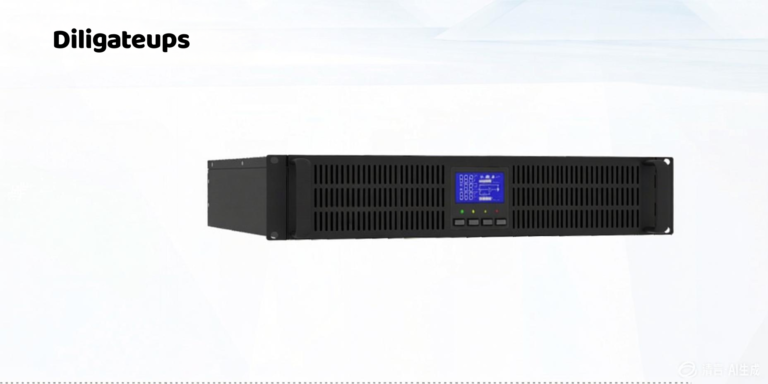
②Rack-mounted UPS: Adheres to the 19-inch standard rack size (minimum 1U), with capacities typically ranging from 1–20 kVA. Installed directly within server racks to save space, it is suitable for network hubs, branch offices or as a supplement to larger UPS systems.
③Modular UPS: Comprising a rack, power modules, static switch modules, monitoring modules and battery banks, all modules support hot-swapping. They can be configured to provide N+1 or N+X redundancy as required; online replacement of faulty modules ensures an extremely short Mean Time to Repair (MTTR), and they support a ‘grow as you go’ expansion model, making them the mainstream choice for current data centre construction.
3. Capacity
①Low Power ≤ 10 kVA Small server rooms, office networks, single racks.②Medium Power 10 – 100 kVA Medium-sized enterprise server rooms, branch offices.
③High Power ≥ 100 kVA Large data centres, cloud computing centres, industrial applications
4.Number of output phases
①Single-input, single-output (220V input / 220V output): low-power UPS.
②Three-input, single-output (380V input / 220V output): small to medium power.
③Three-input, three-output (380V input / 380V output): medium to high power; the standard configuration for data centres, facilitating balanced power distribution across three-phase loads
5.Energy storage
①Static UPS: Rely on batteries (lead-acid or lithium) for energy storage, combined with a power electronic static converter; the vast majority of UPS systems currently on the market fall into this category.
②Dynamic UPS: Rely on the mechanical energy stored in a flywheel; early models required flywheels weighing several tonnes yet could only provide a few seconds of backup. These have now evolved into a hybrid flywheel-and-battery configuration, and are primarily used for high-power instantaneous backup and in industrial settings; their use in data centers remains niche.
6.Rectification technology
①Line-frequency UPS (Transformer UPS): Utilises thyristor (SCR) line-frequency rectification combined with an output isolation transformer, offering excellent resistance to power surges and interference, as well as superior isolation performance; it is suitable for harsh power grids and industrial environments. However, it is bulky, heavy and has slightly lower efficiency, and is gradually being replaced by high-frequency UPS systems in data centers.
②High-frequency UPS (Transformer-less UPS): Utilises IGBT high-frequency rectification with no output transformer. It is compact, lightweight, highly efficient and produces low input harmonics, making it the preferred choice for data centres, the financial sector, telecommunications and other fields.
7. Battery configuration
①Standard units: Feature a built-in battery with a backup time of typically 5–30 minutes; they are plug-and-play.
②Long-life units: Feature an external battery pack, which can be configured to provide several hours of runtime as required; data centers commonly use long-life units in conjunction with high-capacity battery cabinets.