Address
304 North Cardinal St.
Dorchester Center, MA 02124
Work Hours
Monday to Friday: 7AM - 7PM
Weekend: 10AM - 5PM

Address
304 North Cardinal St.
Dorchester Center, MA 02124
Work Hours
Monday to Friday: 7AM - 7PM
Weekend: 10AM - 5PM

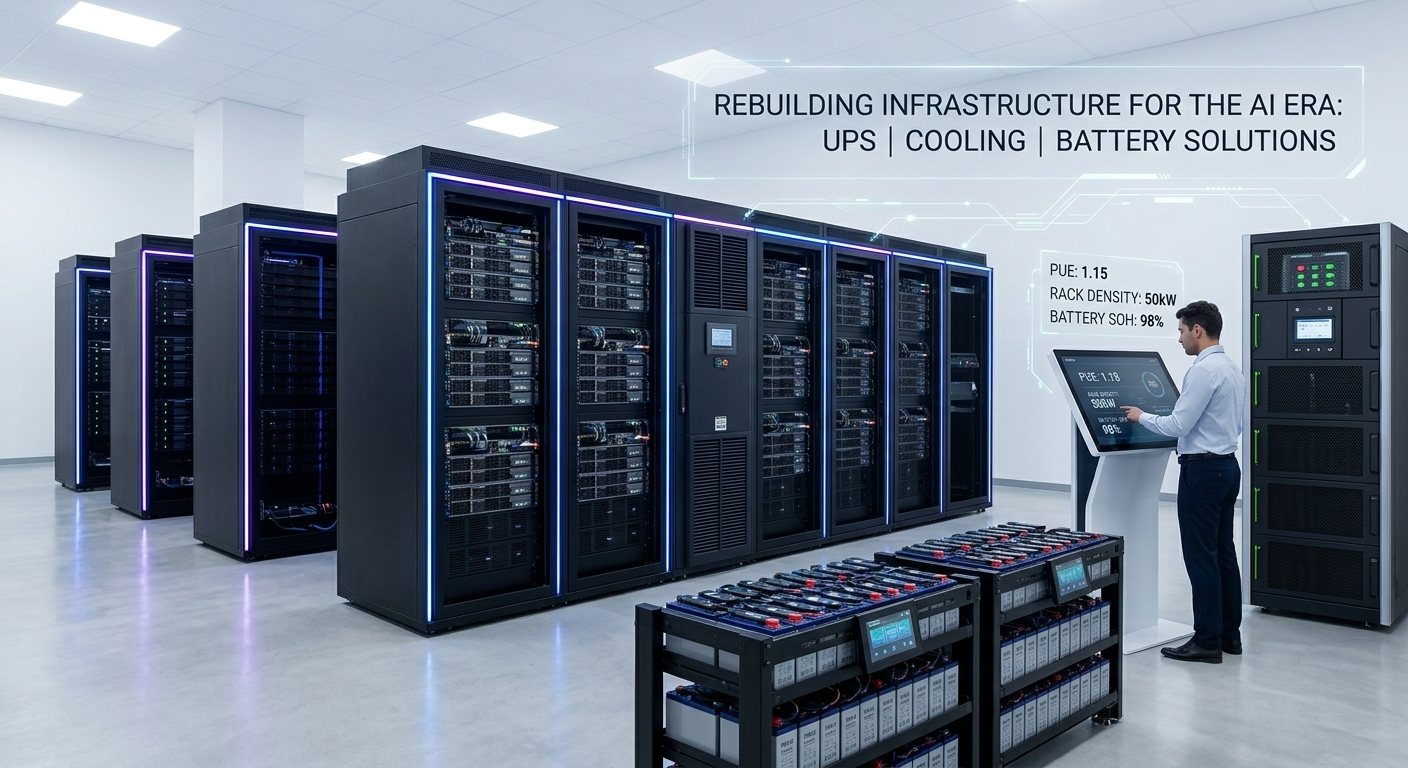
Artificial Intelligence (AI) and large language models are rapidly reshaping the landscape of Data Center Infrastructure.
As high-density GPU servers expand relentlessly, traditional data centers face unprecedented operational breaking points. Specifically, operators now struggle with soaring rack density, uncontrollable heat outputs, and severe power fluctuations.
Therefore, modern IT solutions must focus on more than just pure computing power. Instead, you must build a robust power and cooling foundation to keep these AI workloads running continuously.
Consequently, this article explores the disruptive impact of AI on physical data center infrastructure. Furthermore, we provide actionable solutions to guarantee high availability and green energy efficiency for your AI computing hubs.
AI training clusters require thousands of GPUs to work together seamlessly. Consequently, typical rack power has jumped from 4kW – 8kW to an astonishing 30kW – 100kW+ per rack. This terrifying power density demands superior transient response and extreme power density from your Uninterruptible Power Supplies (UPS) and battery storage systems.
GPU chips generate massive amounts of heat when running at full capacity. Unfortunately, traditional raised-floor airflow designs easily create dangerous local “hot spots.” If your system fails to remove this heat within milliseconds, the GPUs will throttle or suffer permanent damage. Meanwhile, surging cooling energy consumption pushes data center PUE (Power Usage Effectiveness) past regulatory limits. As a result, operators fail to meet strict global green compliance standards.
Cluster training for AI large models usually lasts for weeks or even months. During this critical window, even a microscopic voltage sag or harmonic interference can crash the entire computing cluster. Such incidents wipe out weeks of valuable progress instantly. Therefore, AI data centers require an unprecedented level of 24/7, zero-interruption continuity.
To counter these technical shocks, you must upgrade your modern data center infrastructure around high density, intelligence, and sustainability:
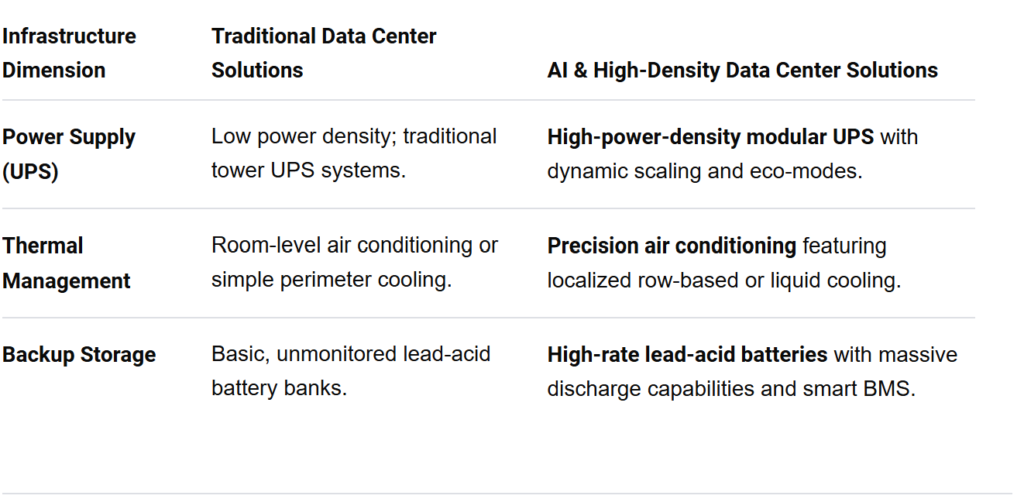
To ensure your data center fully supports next-generation AI solutions, you must optimize three critical physical layers:
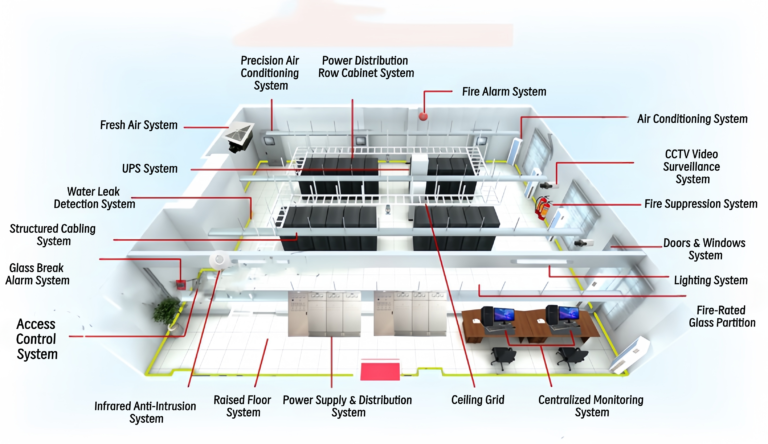
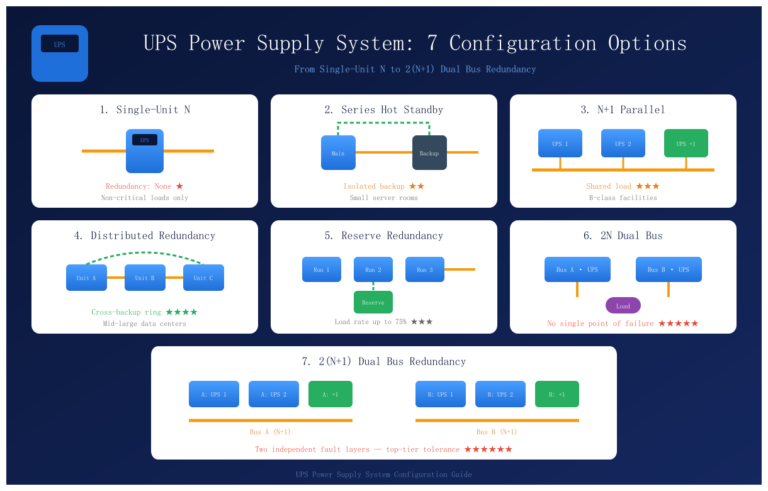
To meet the high power demands of AI racks, data center power delivery must evolve toward modularity.
Traditional cooling methods cannot handle racks exceeding 30kW. Therefore, AI data centers require cooling units placed closer to the heat source.
Although new battery alternatives exist, high-rate lead-acid (VRLA) batteries remain the most secure, cost-effective defense line for data centers.
Artificial intelligence is staging a massive revolution across the global IT industry. However, its core logic still depends on physical power and thermal management. Without robust UPS systems, efficient precision cooling, and reliable lead-acid batteries, the most powerful AI算力 remains a castle in the air.
For enterprises standing at the digital crossroads, the path forward is clear. You must choose an infrastructure solution that perfectly adapts to high-density AI demands while integrating hardware and software. Only then can you secure your winning ticket in the next decade of technology competition.