Address
304 North Cardinal St.
Dorchester Center, MA 02124
Work Hours
Monday to Friday: 7AM - 7PM
Weekend: 10AM - 5PM

Address
304 North Cardinal St.
Dorchester Center, MA 02124
Work Hours
Monday to Friday: 7AM - 7PM
Weekend: 10AM - 5PM

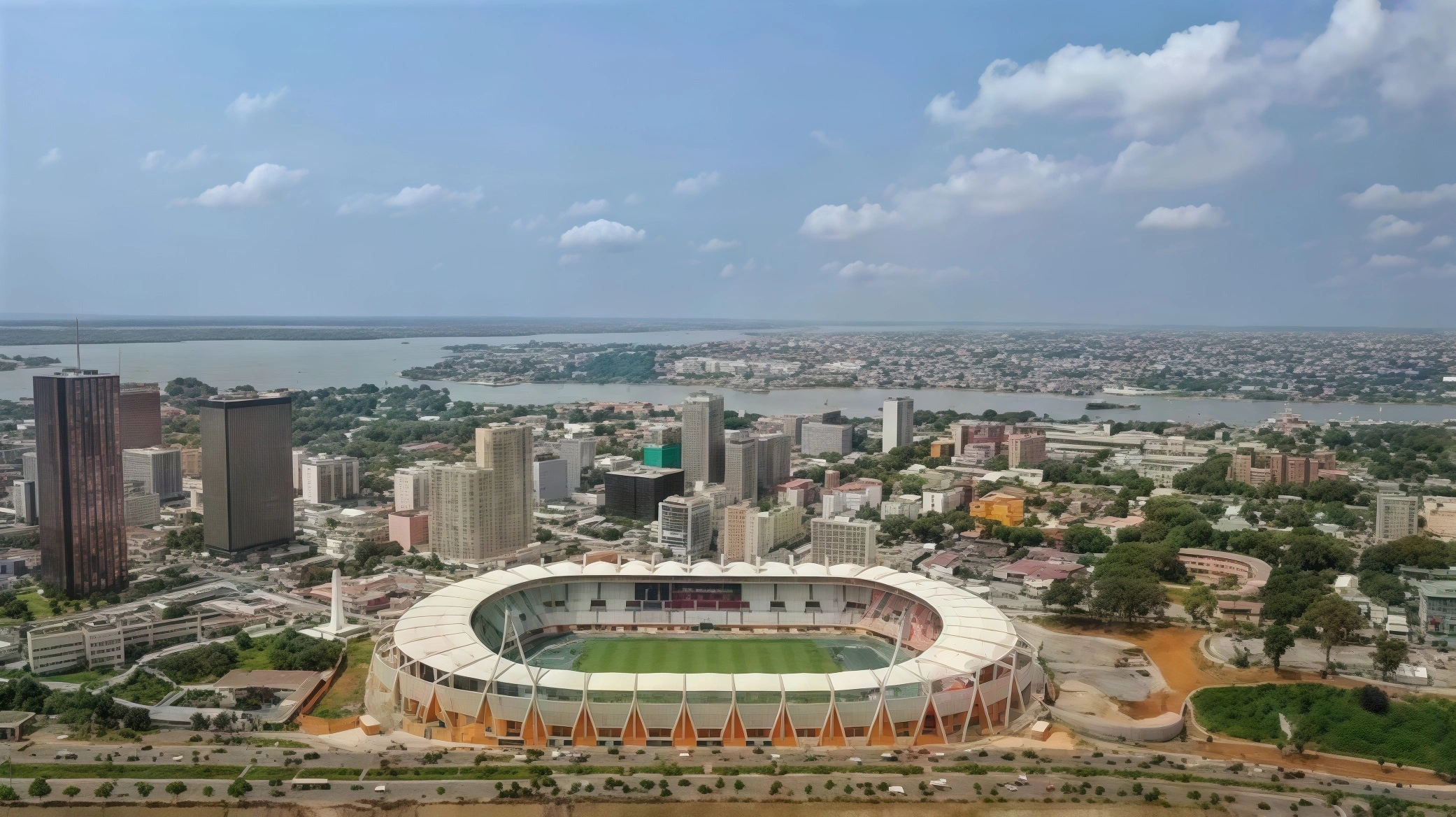
Comparison of Basic Parameters of the Power Grids in China and Côte d’Ivoire
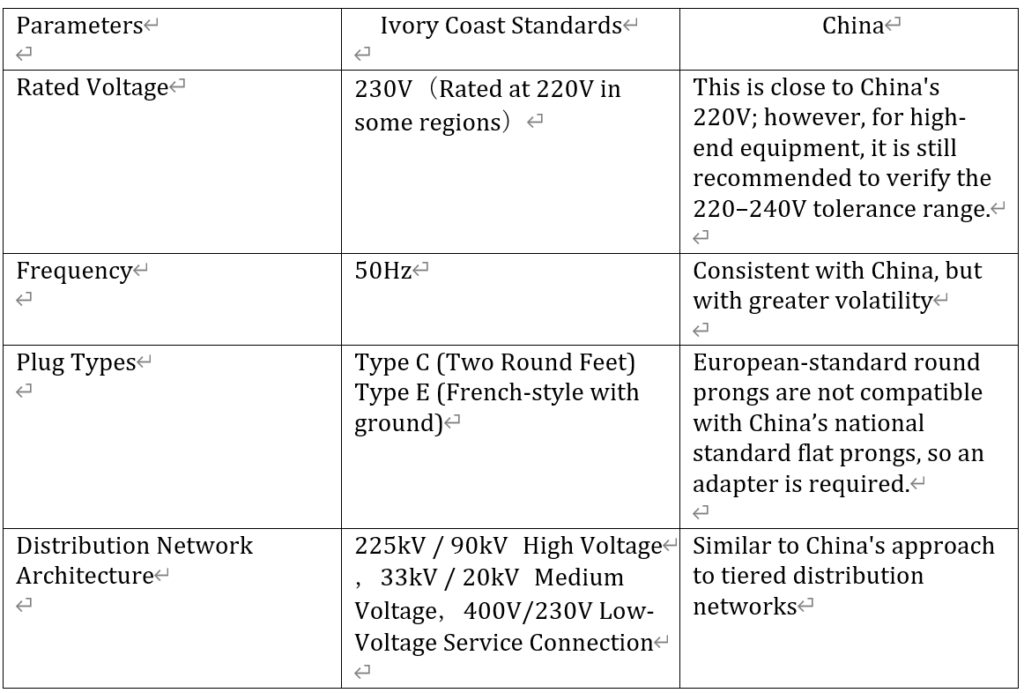
Power Grid Structure and Regional Interconnection
Côte d’Ivoire is an electricity exporter in West Africa. Its power generation is primarily a mix of hydroelectric and thermal power, and two major mechanisms influence the quality of power supply:
• West African Power Pool (WAPP): This facilitates bidirectional interconnection with neighboring countries such as Burkina Faso and Mali. During the dry season, thermal power from neighboring countries can supplement local generation, helping to stabilize fluctuations in local power supply.
• CLSG Interconnection Project: A high-voltage grid linking Côte d’Ivoire, Liberia, Sierra Leone, and Guinea (approximately 1,357 km of transmission lines), aimed at serving approximately 24 million people across the four countries and further expanding the regional electricity market.
Actual Characteristics of Frequency and Power Quality
Translating abstract parameters into “what actually happens,” the Ivory Coast’s power grid exhibits several typical characteristics:
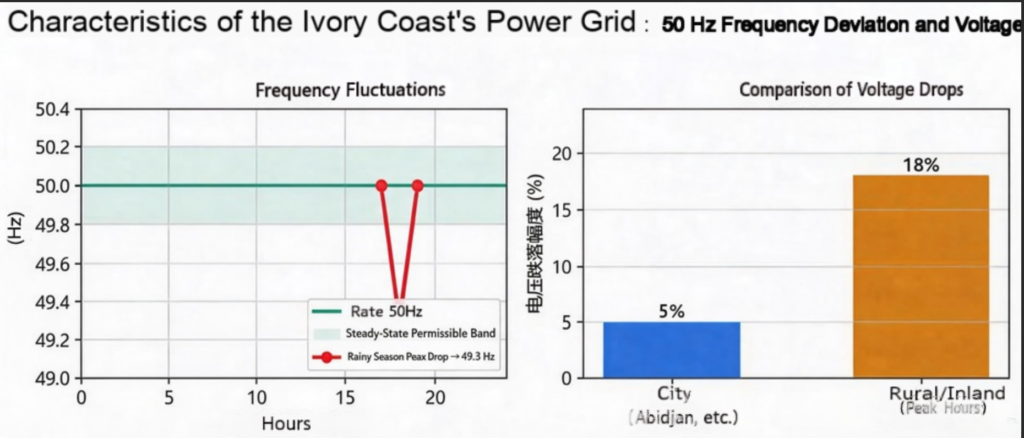
• The nominal frequency is 50 Hz, but fluctuations are significant: The urban grid is relatively stable; however, during peak load periods in the rainy season, the frequency may deviate by more than 0.5 Hz (for example, briefly dropping to 49.3 Hz). Frequency-sensitive equipment (such as medical ultrasound machines and precision instruments) is directly affected.
• Voltage fluctuations vary significantly by region: In cities like Abidjan, voltage fluctuations can be kept within ±5%; however, in rural and inland areas, due to transformer capacity limitations, voltage sags of 15%–20% may occur during peak hours, and in some locations, the voltage may hover around 195 V for extended periods.
• Power outages and voltage surges coexist: In some areas, unplanned power outages and voltage surges upon restoration occur simultaneously, posing a double threat to unprotected equipment.
Back to UPS: Selection Checklist for the Ivory Coast Scenario
Translate the grid characteristics above into selection criteria:
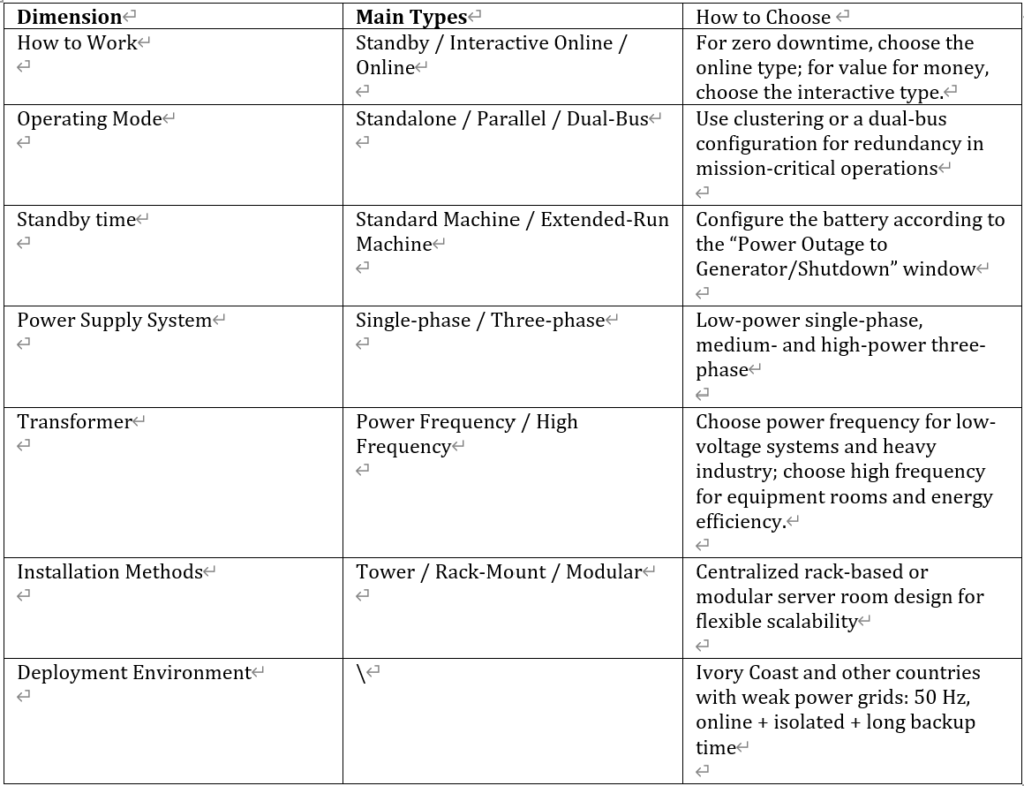
• The frequency must match 50 Hz: Select a model that supports 50 Hz (preferably with automatic 50/60 Hz detection); a line-interactive (double-conversion) UPS can isolate “grid frequency fluctuations” from the load.
• Online-type UPS is preferred for sensitive loads: Use double-conversion online-type UPS for medical equipment, servers, and laboratory instruments to completely isolate frequency deviations and voltage sags; for general office use, an interactive online-type UPS can handle voltage sags.
• Match 230V / Three-phase 400V: Confirm that the UPS input voltage rating matches the local distribution network; for industrial applications, design for three-phase 400V.
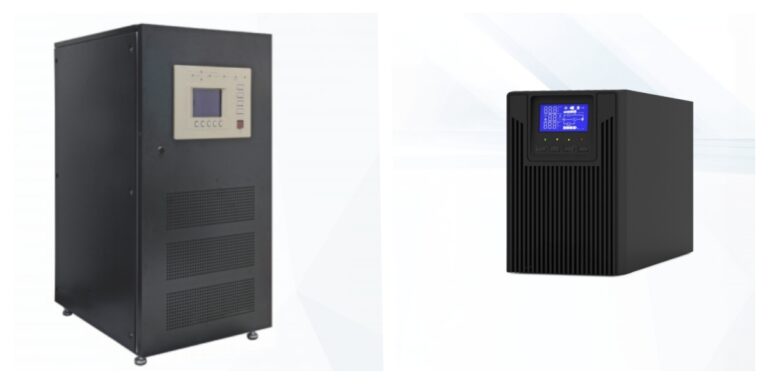
• Choose line-frequency UPS for rural/unstable grids: In locations with significant voltage sags and frequent surges, line-frequency UPS units with isolation transformers offer superior resistance to power spikes and interference.
• Select runtime based on outage frequency: In areas with frequent power outages, choose models with extended runtime or external battery packs to cover the window until “mains power is restored or the generator starts.”
• Grounding is essential: Use Type E outlets with grounding to ensure the effectiveness of protective grounding and ground-fault circuit interrupters (GFCIs); use IEC 60309 industrial connectors for industrial equipment.
• Add an additional level of surge protection/voltage stabilization: Install a surge protection device (SPD) upstream of the UPS to handle overvoltages that occur during power restoration.
In a nutshell: Côte d’Ivoire uses the European standard of 50 Hz / 230 V, which shares the same frequency as China and has a similar voltage, but experiences greater fluctuations in power quality, and regional interconnections can cause cross-border disturbances. When selecting equipment, the most stable combination is “online UPS + 50 Hz compatibility + battery runtime tailored to power outage frequency + an isolation transformer for low-voltage circuits.”
Real-World Case Study: 125 kVA / 2-Hour Backup Power Solution for a Private Company in Abidjan
Having covered the logic of “Grid Characteristics → Selection Checklist” earlier, here is a real-world configuration for reference: A private trading and services company in Abidjan, the economic capital of Côte d’Ivoire, deployed a 125 kVA UPS system to power the IT loads in its office building (office computers, server racks, networking and low-voltage systems, data center air conditioning, and emergency lighting). The requirement was to provide at least 2 hours of continuous power following a mains power outage, covering the window until “mains power is restored or the diesel generator starts up.”
(1) Load and Capacity Calculations
The actual IT and critical infrastructure load for the office building is approximately 90 kW (power factor 0.9, corresponding to approximately 100 kVA). A 125 kVA generator set was selected, with a load factor of approximately 80%, which not only provides a margin for short-term overloads but also reserves capacity for future expansion of workstations and server racks.
• Office computers and monitors: approximately 100 units × 200 W ≈ 20 kW
• Server racks: approximately 8 racks × 3 kW ≈ 24 kW
• Network / low-voltage systems / security: approximately 4 kW
• Data center air conditioning (selected circuits): approximately 15 kW
• Office emergency lighting and outlets: approximately 12 kW
• Other (printers, etc.): approximately 5 kW —— Total: approximately 80 kW; designed with a margin of 90 kW
Equipment Configuration List
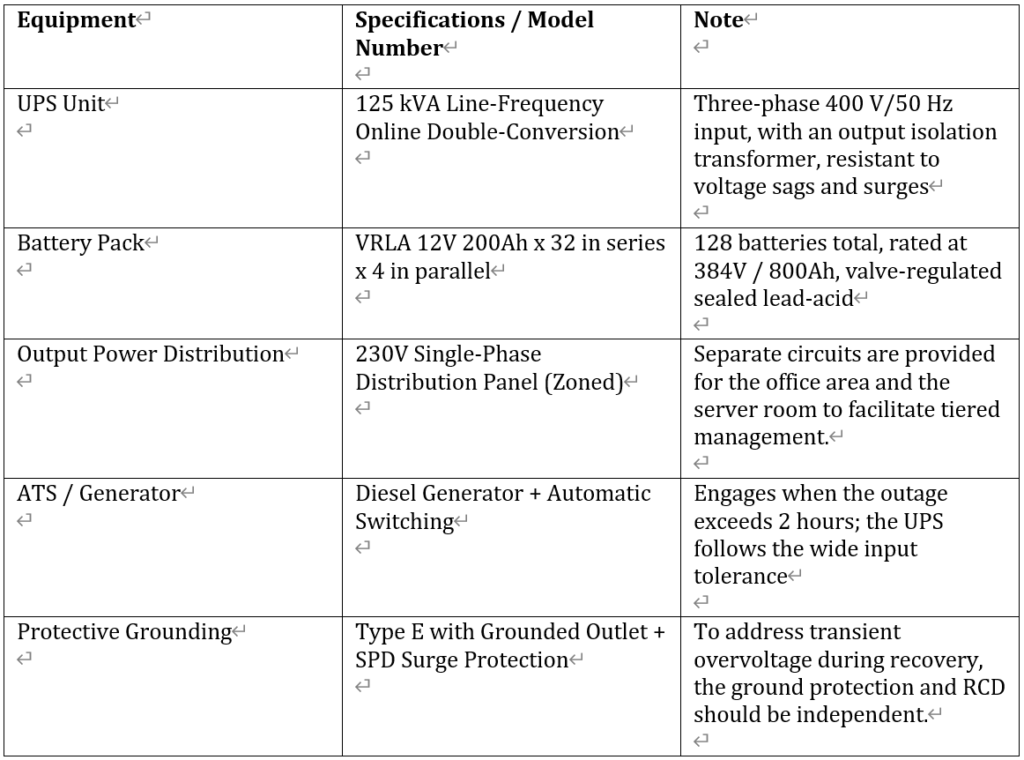
Calculation for a Battery with a 2-Hour Backup Capacity
Using the formula from the previous section, calculate based on a 90 kW load and a 2-hour runtime:
① Energy required by the load = 90 kW × 2 h = 180 kWh
② Taking into account an inverter efficiency of 0.95 and a depth of discharge of 0.85 → The battery must provide ≈ 180 ÷ (0.95 × 0.85) ≈ 223 kWh
③ 384V busbar, average discharge voltage approximately 352V → Capacity ≈ 223,000 ÷ 352 ≈ 634 Ah
④ Rounding for engineering purposes: Select 12V 200Ah × 32 in series × 4 sets in parallel = 800 Ah (nominal 307 kWh); with a 0.78 utilization factor, this yields approximately 240 kWh, sufficient for 2 hours with an 8% margin; Each battery weighs approximately 58 kg, and the entire set weighs approximately 7.4 metric tons, requiring a dedicated battery room (with load-bearing capacity, ventilation, and temperature control maintained at 20–25°C).
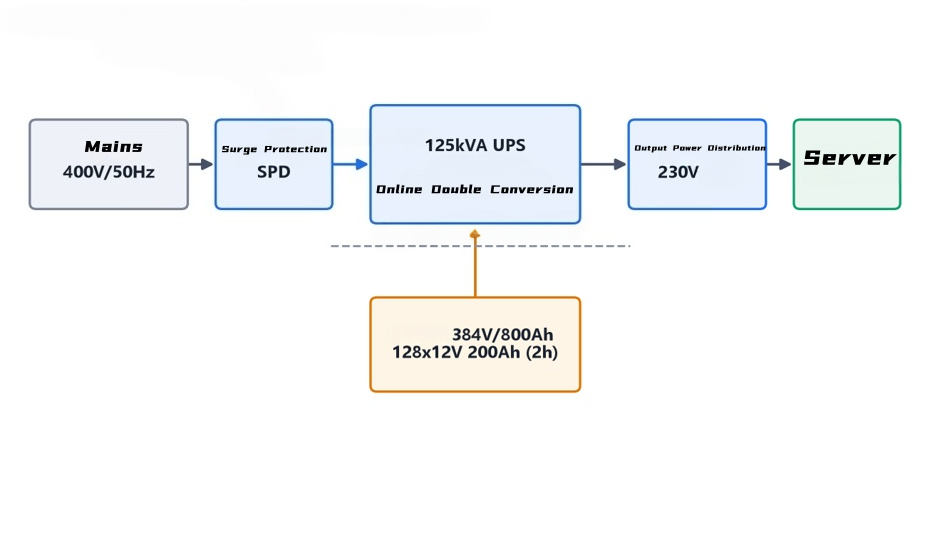
7 Design Considerations for the Ivory Coast Power Grid
• Frequency must be 50 Hz: The unit supports 50 Hz, and the online double-conversion design isolates “frequency fluctuations” from the load;
• Select line-frequency units for weak grids: Equipped with an output isolation transformer to buffer voltage sags (which can reach 15–20% during rural peak periods) and surges during recovery;
• 2-hour extended-run external battery: Covers the “mains restoration / generator startup” window to avoid frequent deep discharges;
• Generator interlock: The UPS is configured with a wide input tolerance; the ATS (Automatic Transfer Switch) handles automatic switching, with the battery only bridging the switchover gap;
• Type E Grounding + Front-End SPD: Lightning and overvoltage protection; protective grounding and ground-fault circuit interrupter (GFCI) protection are independent;
• Battery Room Design: 7-metric-ton load capacity, forced ventilation, temperature control, and proper spacing—critical factors determining lifespan and safety;
• Operations and Maintenance Schedule: Quarterly measurement of battery internal resistance and temperature rise; 3–5-year replacement cycle; 125 kVA units are operated at only 80% capacity, leaving room for future expansion.
Quick Reference Chart for Model Selection and Conclusion