Address
304 North Cardinal St.
Dorchester Center, MA 02124
Work Hours
Monday to Friday: 7AM - 7PM
Weekend: 10AM - 5PM

Address
304 North Cardinal St.
Dorchester Center, MA 02124
Work Hours
Monday to Friday: 7AM - 7PM
Weekend: 10AM - 5PM

With the rapid rise of Vietnam’s manufacturing sector and the robust growth of its digital economy in recent years, a wide array of industrial facilities and data centers have proliferated across the country.
This expansion spans from electronic manufacturing hubs in the north, such as Bac Ninh and Hai Phong, to high-tech development zones in the south, like Binh Duong and Dong Nai. However, Vietnam’s power infrastructure still faces challenges in keeping pace with this surging electricity demand.
Particularly during the rainy and high-temperature seasons, voltage fluctuations, lightning strikes, and localized grid overloads occur frequently.
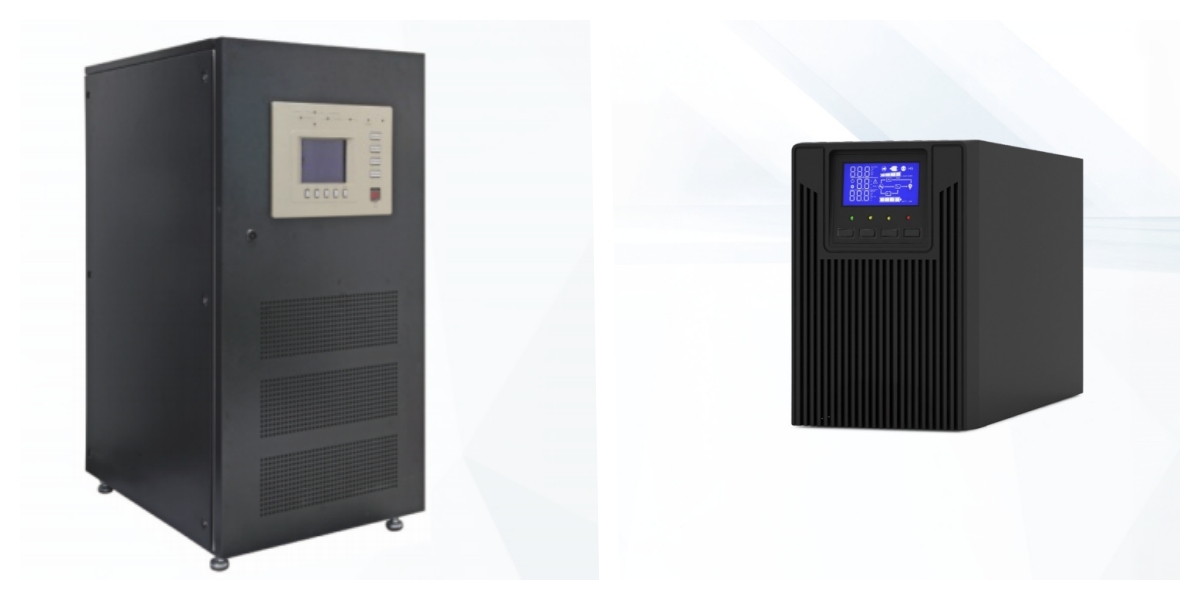
Against this backdrop, Uninterruptible Power Supply (UPS) systems have emerged as the fundamental cornerstone for ensuring production continuity and data security. Currently, the mainstream UPS technologies on the market fall into two primary categories: industrial-frequency UPS (equipped with isolation transformers) and high-frequency UPS (without output transformers).
This article will provide an in-depth analysis of the respective advantages and disadvantages of these two UPS types within the context of Vietnam’s operating environment, alongside optimal equipment selection strategies.
一. Severe Challenges of Vietnam’s Power Grid Environment for UPS Systems
To assess the suitability of a UPS system, it is imperative to first understand the typical characteristics of Vietnam’s power grid:
二. Application of Industrial-Frequency UPS in Vietnam: A Stable and Reliable “Heavy-Duty Fortress”
The defining feature of an industrial-frequency UPS is the incorporation of a power-frequency isolation transformer at the inverter output stage.
Advantage Analysis (in the Context of Vietnam’s Environment):
三. Application of High-Frequency UPS in Vietnam: An Efficient and Agile “Modern Powerhouse”
High-frequency UPS systems utilize IGBT rectification technology, eliminating the bulky output transformer, and represent the developmental trajectory of modern power electronics.
Advantage Analysis (in the Context of Vietnam’s Environment):
四. Selection Recommendations and Trends for the Vietnamese Market
In the Vietnamese market, high-frequency and industrial-frequency UPS systems are complementary rather than a strict replacement for one another. When selecting equipment, enterprises should adhere to the principle of “site-specific adaptation and load matching”:
Conclusion
Entering 2026, Vietnam is committed to transitioning toward green energy and smart grids, though the comprehensive refinement of its infrastructure will still take time. For a considerable period to come, industrial-frequency UPS systems will continue to safeguard the baseline of production in Vietnam’s harsh industrial environments, while high-frequency UPS systems will drive progress amid the wave of digital transformation. For Chinese enterprises expanding into Vietnam and local equipment selection engineers, a profound understanding of the characteristics of these two technologies and their compatibility with the local power grid is the crucial first step in building an indestructible power assurance system.”