Address
304 North Cardinal St.
Dorchester Center, MA 02124
Work Hours
Monday to Friday: 7AM - 7PM
Weekend: 10AM - 5PM

Address
304 North Cardinal St.
Dorchester Center, MA 02124
Work Hours
Monday to Friday: 7AM - 7PM
Weekend: 10AM - 5PM

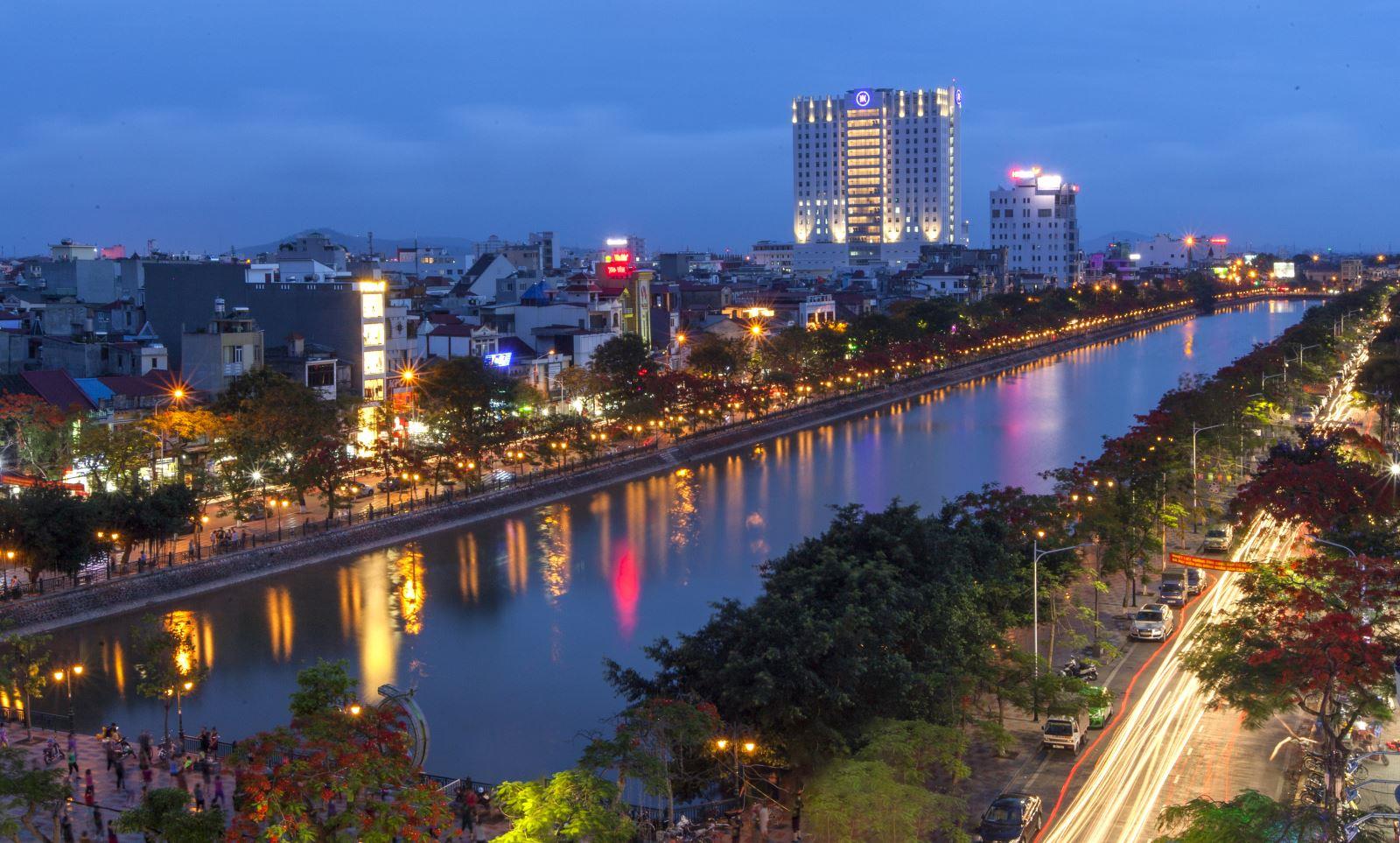
With the restructuring of global supply chains and the boom in Southeast Asia’s digital economy, Vietnam is rapidly emerging as a ‘rising star’ in the eyes of tech giants and multinational corporations. However, building a data centre in this dynamic market is not simply a matter of purchasing land, constructing a building and installing equipment. Unlike the mature markets of Europe or North America, Vietnam has its own unique ecosystem.
If you are considering establishing a presence in Vietnam, the following three key points regarding compliance, energy and site selection are ‘rules for survival’ that you must analyse in depth.
一、Compliance Barriers – The Unavoidable ‘Data Localisation’ Red Line
In recent years, the Vietnamese government has placed an unprecedented emphasis on data sovereignty.
Data subject to the data localization requirement
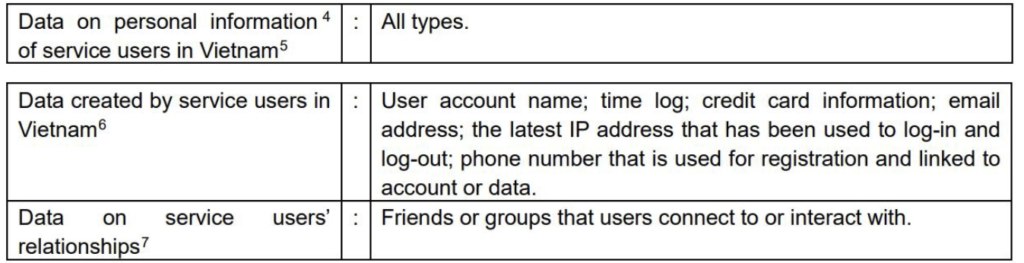
Data localization requirements applicable to foreign enterprises
Unlike domestic enterprises, Decree 53 provides further guidance to narrow down the scope of foreign enterprises that are subject to these data localizations to make the regulations more realistic in terms of governance of foreign enterprises. Accordingly, foreign enterprises must store the Subjected Data and open a branch or a representative office in Vietnam if they satisfy all the following conditions:
Sanctions
source: https://www.lexology.com/library/detail.aspx?g=efe0bcfb-031b-4568-b9c1-fc375149a5f5
二、Energy Challenges — The Green Transition in the Shadow of the ‘Power Shortage’
1. In the summer of 2023, northern Vietnam (including Hanoi and the surrounding major industrial provinces such as Bac Ninh and Bac Giang) experienced a severe power shortage, forcing a large number of factories—including those of Foxconn and Samsung—to suspend production and implement rotational leave. For data centres aiming for 99.99 per cent availability, this served as a critical warning. Vietnam’s national power grid is overburdened, particularly in the north, where the electricity infrastructure has not kept pace with the explosive growth of industry.
“We had a 26-hour power cut. It cost us tens of thousands of dollars that day. It’s not nice at all,” said Vu Chi Hieu, director of Vietnam’s KingBill XNK Joint Stock Company that produces aluminum parts in Bac Ninh province, which neighbours Hanoi.
Susumu Yoshida from Japan Chamber of Commerce and Industry told AFP that direct damage from one single power outage affecting five manufacturers at an industrial park was over $190,000.
South Korea — Vietnam’s top foreign investor — also complained that power cuts two or three times a week “had badly affected production activities”.
“The power cut issue will be very serious for not only firms who have already invested in Vietnam, but also for us trying to call for investors to come to Vietnam,” Hong Sun, chairman of the Korean Chamber of Business in Vietnam, told AFP.
Trung’s boss, Nguyen Duc Ninh, was suspended Wednesday pending an investigation into the outages.
source: https://business.inquirer.net/405658/vietnams-power-crisis-hits-local-firms-foreign-investors
2. Future of Renewable Energy Development in Vietnam
Vietnam is the 11th best-emerging market for clean energy investment globally. According to VietinbankSC, the domestic renewable energy market will reach $714 billion and continue to grow for at least another 25 years. From 2020 to 2030, the solar market will grow by 12.8%; the wind market will grow by 34.2% per year.
Renewable energy is on its way to becoming the nation’s dominant energy source. As investments in solar and wind power begin to grow again, Vietnam has the potential to be among the top renewable energy countries in Asia and beyond.
The government’s recognition of the country’s huge technical potential for clean energy development in the National Power Development Plan VIII is a big first step. Next, Vietnam needs to improve its targets. For example, renewable energy currently accounts for about 30% of Vietnam’s total potential, creating great development opportunities for clean energy technology. Moreover, the Government also has ambitions to become the leading green energy exporter in the region. Accordingly, Singapore has plans to import clean electricity from Vietnam. Specifically, The Straits Times reported on 14 November 2024 that from 2033, Singapore will import 1.2 gigawatts (GW) of low-carbon electricity, mainly generated from wind power, from Vietnam.
source: https://en.evn.com.vn/d/en-US/news/Vietnam-Asias-future-clean-energy-plant-60-206-500553
Vietnam green data center market size reached USD 481.0 Million in 2025. Looking forward, IMARC Group expects the market to reach USD 1,631.6 Million by 2034, exhibiting a growth rate (CAGR) of 14.10% during 2026-2034. The market is experiencing growth due to heightened awareness of environmental sustainability, governmental regulations advocating for energy efficiency, increased demand for cloud-based services, and advancements in renewable energy technologies.
source: https://www.imarcgroup.com/vietnam-green-data-center-market
When building a data centre in Vietnam, the budget for ‘power redundancy’ and ‘back-up power’ must be significantly increased. You cannot rely entirely on the stability of the municipal power grid.
Site selection strategy: It is essential to assess the capacity of local substations and the stability of the power grid.
Technical approach: Adopting high-efficiency liquid cooling technology and reducing the PUE (Power Usage Effectiveness) value is not merely an environmental slogan, but a vital measure for reducing operating costs.
三、Geoeonomic Dividends —Why go to Vietnam now? Aside from local demand, the deeper reason lies in the global shift in manufacturing.
Data spillover from the manufacturing sector and demand for edge data centers
With giants such as Apple, Samsung and LG, as well as a large number of supply chain enterprises, establishing a presence in Vietnam, traditional manufacturing is undergoing a transformation towards ‘smart manufacturing’. Factories generate vast amounts of LOT data, supply chain management data and ERP data. This data not only needs to be stored but also requires real-time processing with low latency, which has directly fuelled demand for edge data centers.
Apple supplier Pegatron is the recent to emphasize its intent to expand production to other countries outside China, including Vietnam. Pegatron suspended its operations in Shanghai and Kunshan in April due to strict COVID-19 protocols, which has led to labor shortages and production and delivery delays. The Taiwan-headquartered company assembles about 20% to 30% of all iPhones.
Pegatron president Liao Syh-jang told Reuters that “expansions in Vietnam,” as well as in India, Indonesia, and North America, are needed to solve labor shortages, address the gap between peak and low seasons, and increase the utilization of its production capacity.
source: https://vietcetera.com/en/more-apple-suppliers-are-moving-production-lines-to-vietnam
Samsung Display Co, a subsidiary of South Korean electronics giant Samsung, is set to invest an additional US$1.8 billion in a new OLED manufacturing plant in northern Vietnam, Reuters is reporting. The facility, to be located in Yen Phong industrial park, Bac Ninh province, will focus on producing advanced organic light-emitting diode (OLED) displays for automobiles and technology equipment. This investment will elevate Samsung’s total capital in Bac Ninh to US$8.3 billion, up from the current US$6.5 billion.
source: https://www.vietnam-briefing.com/news/samsungs-us1-8-billion-investment-to-boost-vietnams-oled-manufacturing-capacity.html
As of April 2024, LG’s investment in Vietnam, mostly in the northern coastal city of Hai Phong, had reached $8.24 billion. Starting with $1.5 billion in 2013, the investment includes $7.24 billion conducted by LG itself, featuring LG Electronics, LG Display, LG Innotek, LG CNS, LG Chemical, and LG International, and $1 billion conducted by 50 affiliates of LG.
In November 2024, LG Display received an investment registration certificate to invest $1 billion more in Hai Phong.
source: https://theinvestor.vn/revenues-of-lgs-3-factories-in-vietnam-up-10-in-2024-to-103-bln-d14887.html
Data center hubs
The major hubs for data centers in Vietnam are Ho Chi Minh City and Hanoi, collectively hosting 27 data centers. Among these, Hanoi stands out with around 11 established facilities. In terms of geographical distribution, north Vietnam accounts for 46 percent of data centers in the country, followed by the southern region (35 percent) and the central region (11 percent).
Industry segments
The data center market in Vietnam encompasses various categories, including:
IT infrastructure: Servers, storage systems, network infrastructure
Electrical infrastructure: UPS systems, generators, transfer switches and switchgears, PDUs, other electrical infrastructure
Mechanical infrastructure: Cooling systems, racks, other mechanical infrastructure
General construction: Core and shell development, installation and commissioning services, engineering and building design
Security and compliance: Fire detection and suppression, physical security, DCIM (data center infrastructure management)
Tier standard: Tier I & Tier II, Tier III, Tier IV
source: https://www.vietnam-briefing.com/news/vietnams-data-center-sector-insights-and-key-regulation.html
Vietnam Data Center Market News
In August 2025, FPT Corporation inaugurated the Fornix HCM02 Data Center in Ho Chi Minh City’s High-Tech Park,featuring a 10,000-square-meter LEED-certified facility supporting 3,600 racks.
In August 2025, LG CNS announced plans to develop a hyperscale Al data center in collaboration with VNPT andKorea Investment Real Asset Management, targeting Vietnam’s digital transformation needs.
In August 2025, IPTP Networks from Cyprus announced a phased USD 200-million AI data center project in Da Nang with construction commencing in Q4 2025, featuring an initial 10-MW capacity, in collaboration with DeCenter AI.
In April 2025, Viettel commenced construction on Vietnam’s first hyperscale data center in Tan Phu Trung Industrial Park Ho Chi Minh City, targeting 140-MW capacity across 10,000 racks, to support Al 5G, and cloud computing platforms.
In March 2025, Saigon Asset Management announced plans to build a 150 MW data center in Binh Duong Province with a targeted investment of USD 1.5 billion.
In July 2024, MC Corporation established CMC Al Digital Infrastructure (CMC AD), a subsidiary specializing in hyper-scale data center investment and operations, with an initial capital of USD 12.5 million.
source: https://www.psmarketresearch.com/market-analysis/vietnam-data-center-market-report
North-South Differences: Ho Chi Minh City vs. Hanoi
Vietnam’s data centre market exhibits distinct ‘dual-core’ characteristics:
The South (Ho Chi Minh City and surrounding areas): The traditional economic hub, with well-developed financial, e-commerce and gaming sectors. This region serves as the landing point for international submarine fibre-optic cables and offers the best network connectivity, making it ideal for the construction of large-scale cloud data centres catering to international business and financial transactions.
The North (Hanoi, Haiphong): The manufacturing stronghold. Demand here stems primarily from industrial manufacturing, logistics and government offices. However, as mentioned earlier, the north faces severe power shortages and land scarcity.
In-depth Analysis:
Do not blindly flock to first-tier cities. Land prices in prime locations in Ho Chi Minh City and Hanoi are high, and land is scarce. The current trend is towards expansion into surrounding provinces:
South: Binh Duong and Dong Nai provinces are emerging as new hotspots for data centres, offering low land prices and proximity to Ho Chi Minh City.
North: Haiphong is emerging as a new option due to its deep-water port and robust industrial infrastructure, though close attention must be paid to its power expansion plans.
Hai Phong’s Location
Hai Phong is one of five major municipalities in Vietnam, with direct connection to the central authority. Home to nearly 2 million inhabitants, Hai Phong is the third largest city in Vietnam, after HCMC and Hanoi. The city’s rapid urbanization, with an additional 12%-15% middle-class population annually, has underpinned its exceptional growth over the past five years.
Located on the main economic corridor, along the north-eastern coastal area, Hai Phong is set to become the main gateway for import and export for the Northern Region which will provide companies with easy accessibility to transport their goods on a global basis.
Given its proximity to China, being only 200 km from the border, the city is widely regarded as the China+1 manufacturing base in ASEAN to take advantage of China-ASEAN FTA.
Government Support
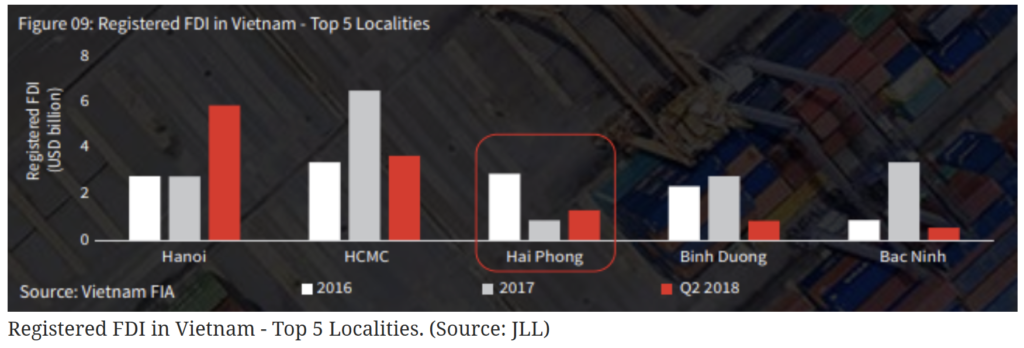
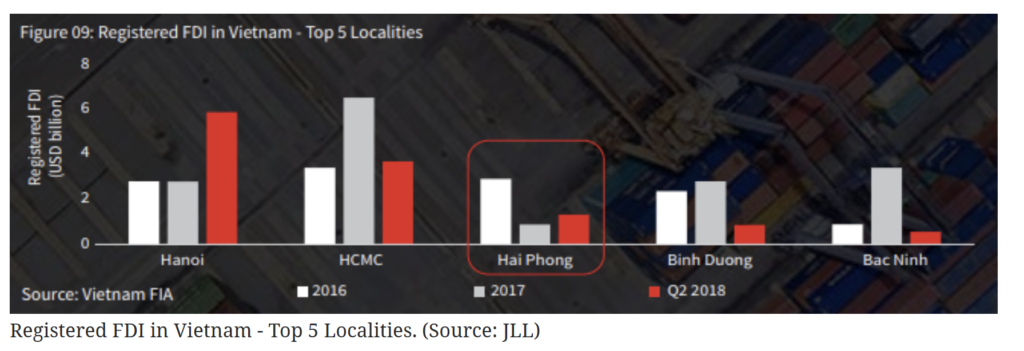
Hai Phong has been the spotlight for FDI investment, garnering attention and support from the central authority, supported by a major infrastructure boom and numerous governmental incentives.
The central government has shown its commitment to continue Hai Phong’s exponential growth by offering numerous special tax incentives, which has paved the way for it to become a foreign investment magnet, as streams of FDI pour it’s way into the city’s economy. The constant improvement of Hai Phong’s Provincial Competitiveness Index (PCI) rating demonstrates the authorities continued efforts to enhance the business environment, which will further bolster the attractiveness of Hai Phong.
The Hai Phong Economic Zone, which offers companies preferential treatment when they set up operations, is also acting as a catalyst to tempt more investors to the region.
source: https://reatimes.vn/hai-phong-has-all-the-necessary-ingredients-to-develop-into-a-true-global-port-city-202500798.htm
Summary
Building a data centre in Vietnam is a game of ‘dancing on the razor’s edge of compliance, surviving in the narrow gaps of energy supply, and carving out a share of the manufacturing dividend’.
If you resolve compliance issues, you have secured your entry ticket;
if you ensure energy stability, you have built a moat;
if you choose the right location, you will reap the benefits of the geo-economic landscape.
Over the next five years, Vietnam’s data centre market will continue to maintain double-digit growth rates. For investors, now is no longer the time to sit on the sidelines; rather, it is the optimal moment to gain an in-depth understanding of the local power grid, legal provisions and the layout of industrial parks.