Address
304 North Cardinal St.
Dorchester Center, MA 02124
Work Hours
Monday to Friday: 7AM - 7PM
Weekend: 10AM - 5PM

Address
304 North Cardinal St.
Dorchester Center, MA 02124
Work Hours
Monday to Friday: 7AM - 7PM
Weekend: 10AM - 5PM

—With a Look at Global Energy Equipment Manufacturers’ Expansion into Vietnam
Since 2025, Vietnam’s data center market has been growing at a compound annual growth rate of 14%–20%. The complete liberalization of 100% foreign ownership and data localization requirements (PDPL) have driven the deployment of domestic computing power. However, the biggest obstacle to scaling up is not land or regulatory approvals, but electricity.
一、Data shows: Data center capacity in Vietnam is expanding rapidly, but the power grid’s capacity to support this growth is clearly lagging behind
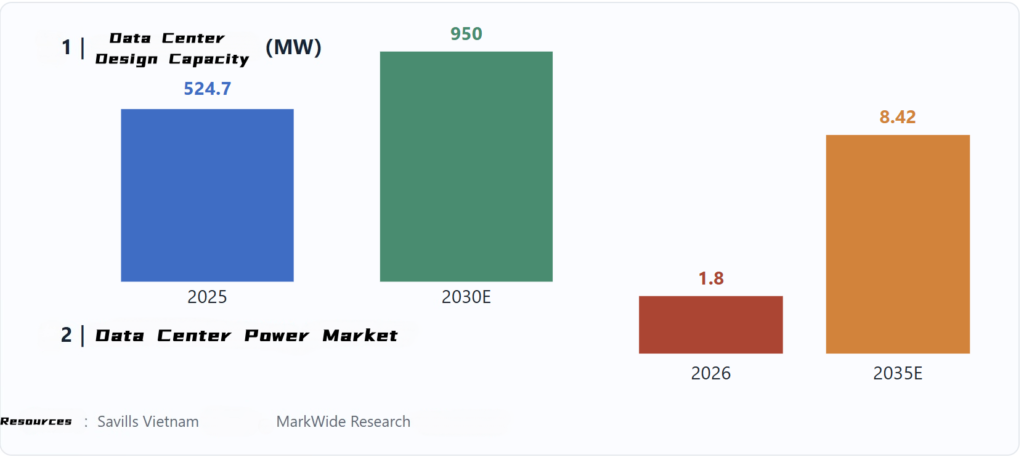
二、 Why Has “Electricity” Become an Achilles’ Heel?
Three Major Constraints:
In other words, Vietnam’s advantage of low construction costs is being offset by the “grid bottleneck,” which acts as a hidden ceiling.
Securing a firm power agreement has become the real hurdle for the next wave of investable supply.
三、Global Energy Equipment Manufacturers’ Expansion into Vietnam (Key New Developments)
Facing with surging demand and power supply challenges, UPS、power distribution and liquid cooling manufacturers are accelerating their expansion into Vietnam—and this is precisely the local supply chain that companies and investors operating in Vietnam should leverage.
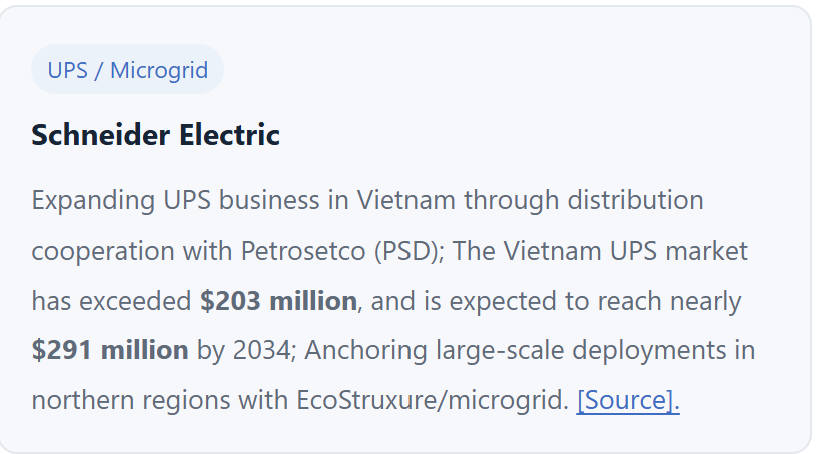
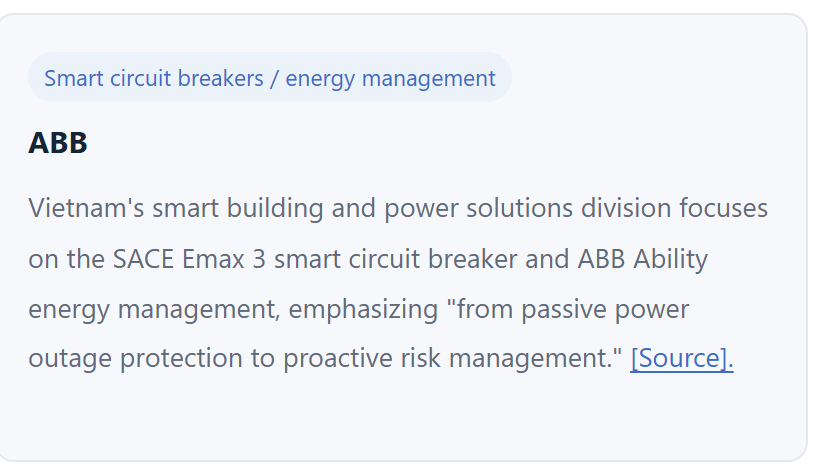
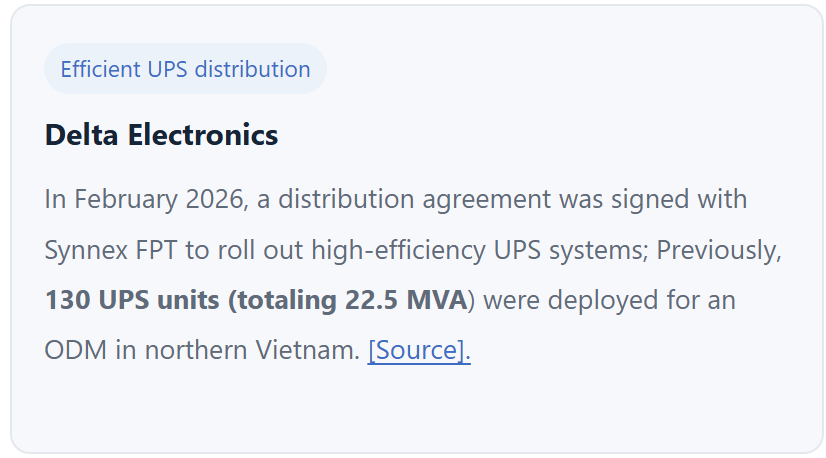
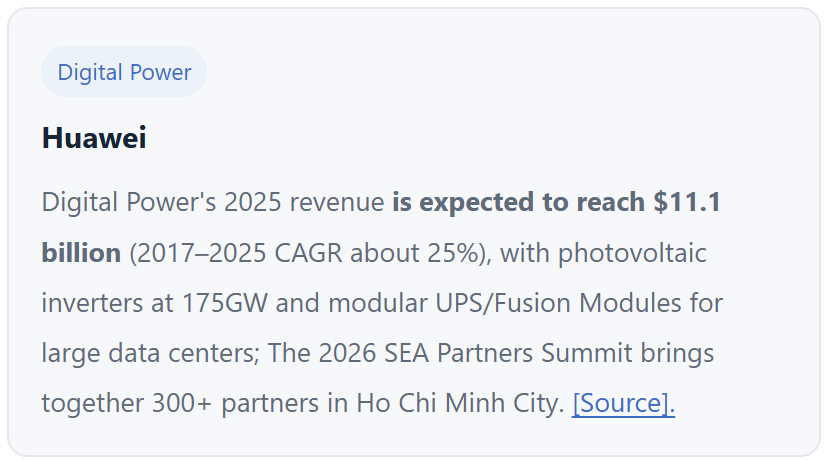
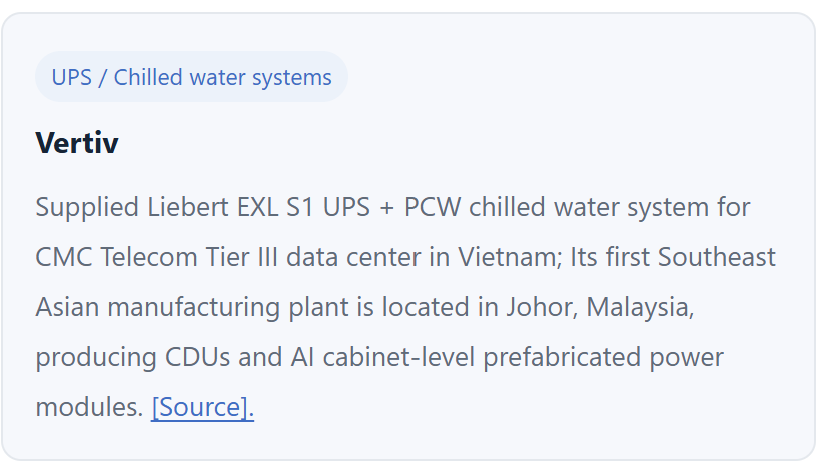
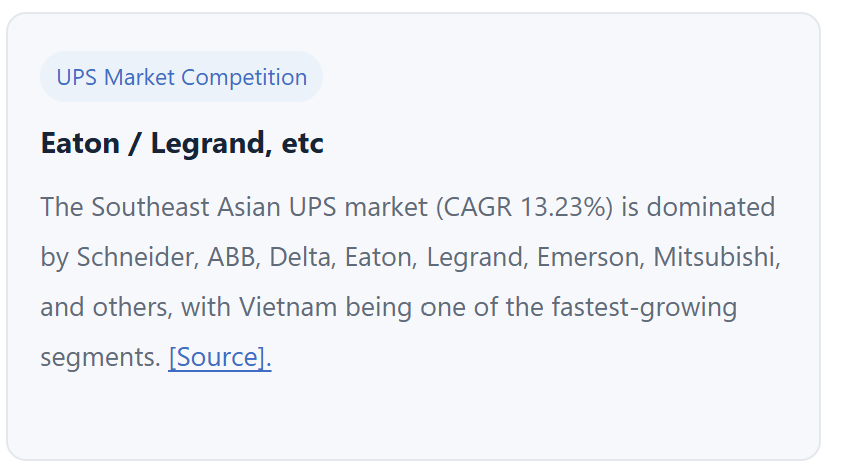
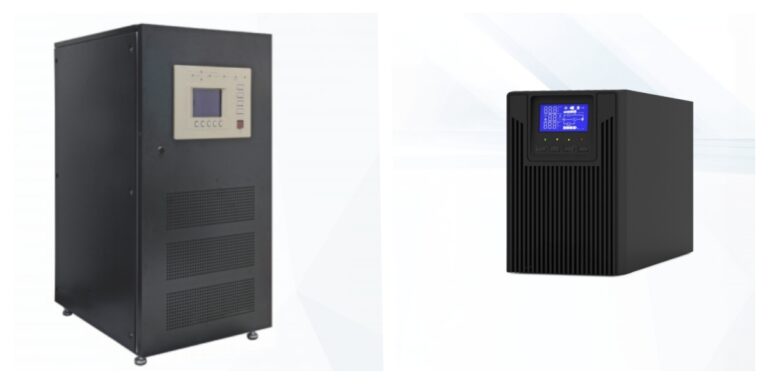
1) Power Supply and Distribution / UPS: A Cluster of International Giants
2) Heat Dissipation / Liquid Cooling: A Wave of Factory Construction Is Sweeping Through Northern Vietnam
Cooler Master: The Giaphang Industrial Park in Bac Ninh Province has invested $200 million and started production (AI server cooling modules, liquid-cooled CDUs), with plans to add another $2.8 billion over several years.
AVC (Major Cooling Manufacturer): Invested 600 million USD to build a parts factory in the No.1 Industrial Park of Ninh Binh Jinbang, to start production before January 2027, producing cooling fans, cold plates, and liquid cooling systems.
四、Advice for participants in the Vietnamese market
There are three key points to keep in mind for companies investing in and operating data centers and cloud service providers in Vietnam, as well as corporate IT decision-makers:

Reference link (supported by foreign website data)
Savills Vietnam — Data Center in Vietnam: The Inevitable Investment Trend
Seetao — Supported by dual cost policies, Vietnam’s AI data center accelerates expansion
MarkWide Research — Vietnam Data Center Power Market 2026–2036
VnNow — Schneider × PSD distribution cooperation / Vietnam UPS market
Vietnam.vn — ABB discusses power infrastructure in the AI era
Synnex FPT — Delta × Synnex FPT UPS distribution agreement
Nhan Dan — Huawei SEA Partner Summit 2026
Vertiv — CMC Telecom Data Center Case Study
Data Insights Market — Southeast Asia UPS Market
Liquid Cooling Master (AVC) Expansion of Major Cooling Manufacturers — Industry Research Excerpt