Address
304 North Cardinal St.
Dorchester Center, MA 02124
Work Hours
Monday to Friday: 7AM - 7PM
Weekend: 10AM - 5PM

Address
304 North Cardinal St.
Dorchester Center, MA 02124
Work Hours
Monday to Friday: 7AM - 7PM
Weekend: 10AM - 5PM

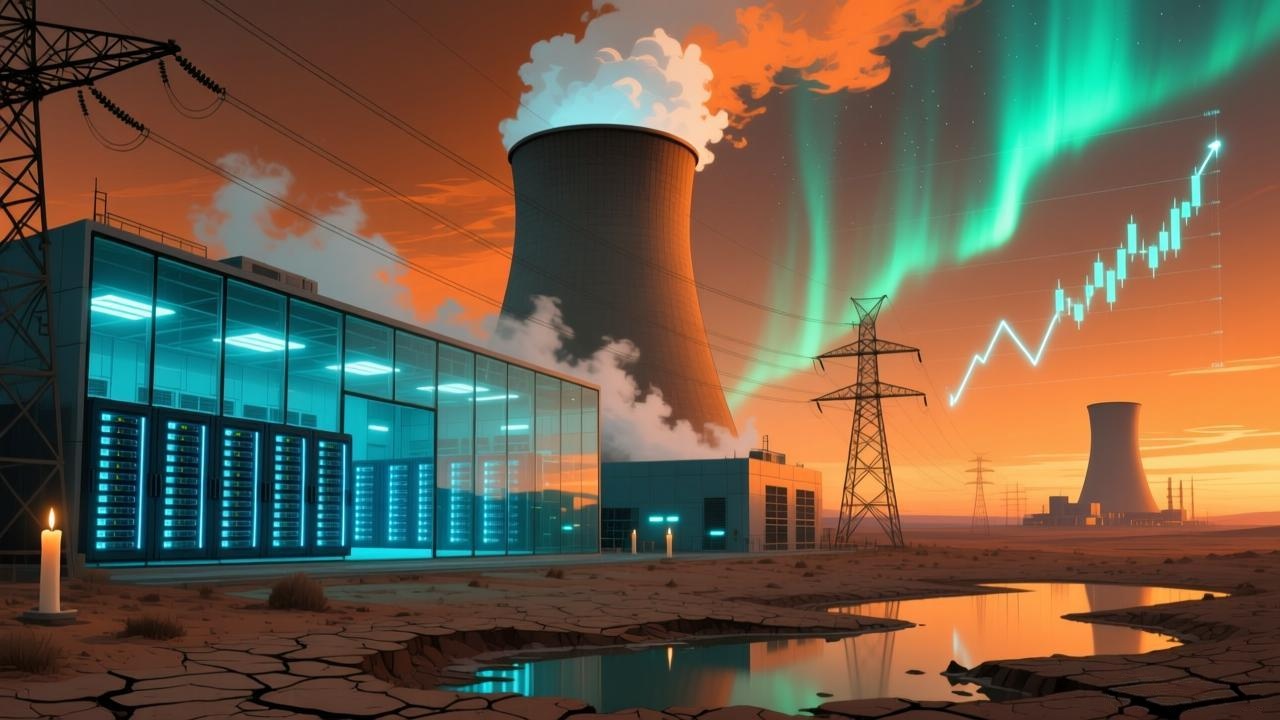
The single most important takeaway: the binding constraint on AI is no longer GPU supply—it is electricity, water, and thermal engineering. Every unit of environmental pressure created by the buildout is being monetized by a specific, investable infrastructure layer.
The math is stark. Global data center electricity consumption will more than double to approximately 945 TWh by 2030, with the United States alone driving roughly 50% of that growth
The United Nations University estimates the associated water footprint will reach 9.3 trillion liters—equivalent to the basic domestic water needs of all 1.3 billion people in Sub-Saharan Africa—while land use will exceed 14,500 square kilometers, roughly twice the Jakarta metropolitan area
Meanwhile, the five largest hyperscalers are projected to spend over $600 billion in capex in 2026 alone, up 36% year-over-year, with roughly 75%—about$450 billion—directed at AI infrastructure
These three stress vectors—grid, generation, and thermal—are not independent problems. They form a single pressure system, and each has spawned a distinct, measurable investment front.
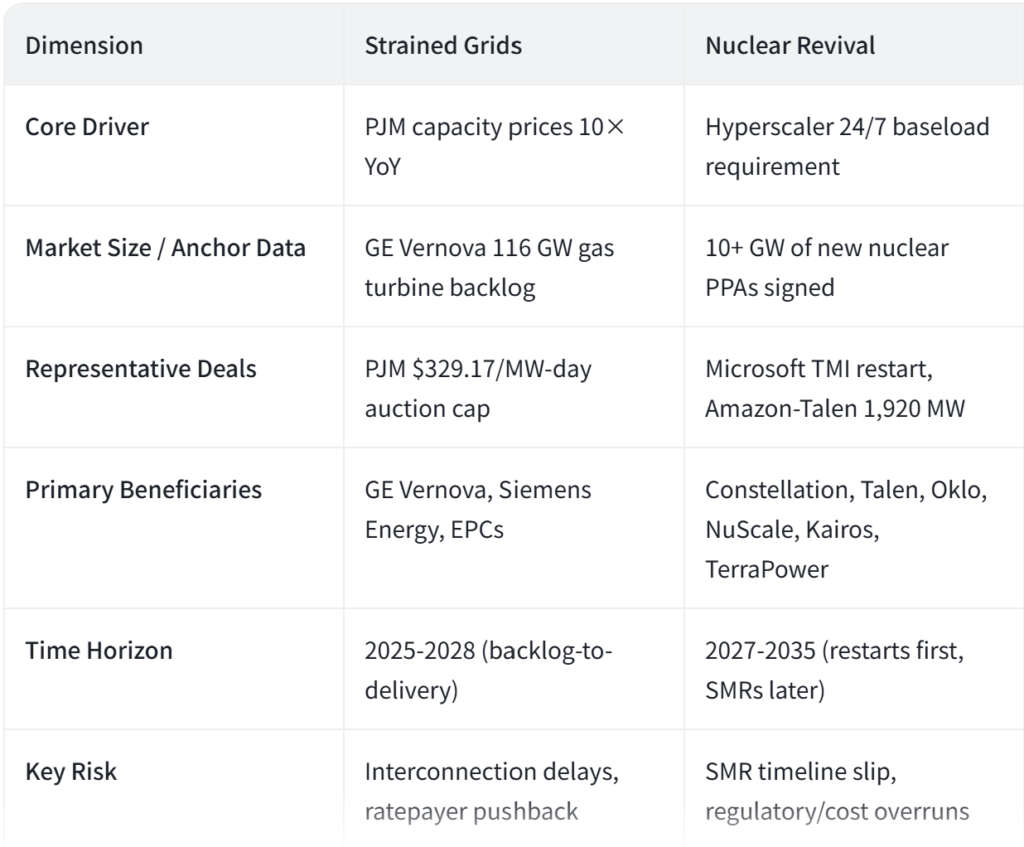
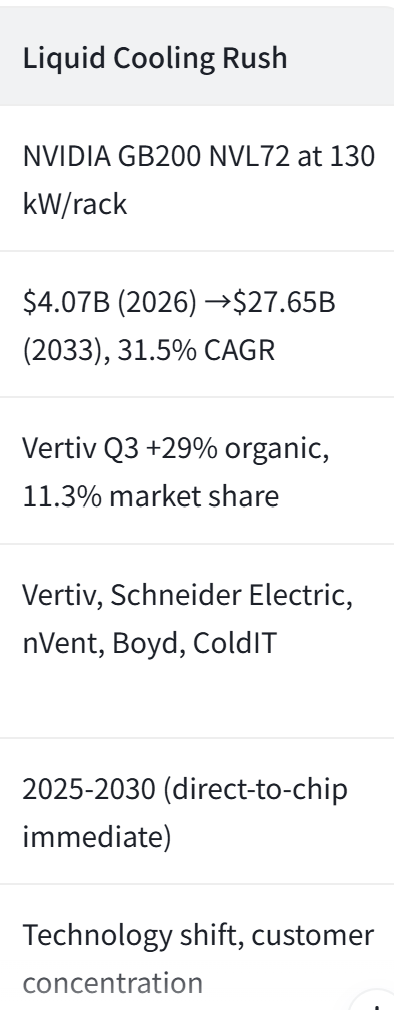
Three Supplementary Judgments
Grid: The price shock is confirmed—wholesale electricity prices near large data centers have risen as much as 267% over five years (UNEP); AEP Ohio has introduced an “85% take-or-pay” rate structure, effectively creating quasi-contracted revenue streams for generators.
Nuclear: Landmark deals include Microsoft’s Three Mile Island restart (835 MW/20 years), Amazon-Talen at 1,920 MW (~$18 billion in contract revenue), and Meta-TerraPower at 2.8 GW. But the Greenpeace-commissioned report warns that nuclear’s water intensity and radioactive waste problems remain unsolved, and the SMR sector has already corrected sharply—Oklo is still down 74% from its October 2025 high. Backlog quality, not narrative, decides winners.
Liquid cooling and environmental returns: The Cornell Nature Sustainability study provides the hardest quantification—advanced liquid cooling plus smart siting plus grid decarbonization can deliver 73% carbon and 86% water reductions versus worst-case scenarios. Liquid cooling is therefore upgraded from engineering necessity to a permitting passport in water-stressed regions—the source of its ESG premium.
Conclusion
The three fronts form a causal chain: grid shortage → nuclear procurement → high-density racks → liquid cooling as a structural requirement; regulation and environmental justice form the emerging fourth layer of alpha. The allocation logic in one sentence: first buy the constraints themselves (turbines, nuclear, liquid cooling), then buy the compliance businesses the constraints create.
Risk disclosure: Inference efficiency gains could reduce compute demand; water regulation may tighten faster than expected; SMR deliveries may slip.
As Cornell’s Fengqi You puts it: *“The AI infrastructure choices we make this decade will determine whether AI accelerates climate progress or becomes a new environmental burden.”