Address
304 North Cardinal St.
Dorchester Center, MA 02124
Work Hours
Monday to Friday: 7AM - 7PM
Weekend: 10AM - 5PM

Address
304 North Cardinal St.
Dorchester Center, MA 02124
Work Hours
Monday to Friday: 7AM - 7PM
Weekend: 10AM - 5PM

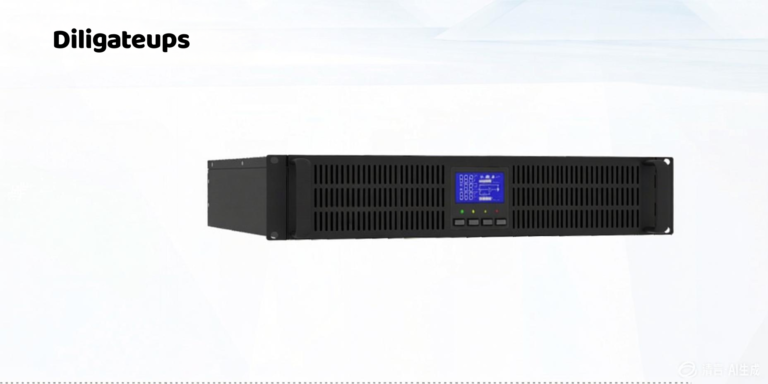
What is the “double-conversion” technology? What is the path that energy follows?
“Double-conversion” refers to the process in which alternating current (AC) undergoes two physical transformations before being supplied to the load:
First conversion (AC → DC): The input utility power first passes through a rectifier, where it is converted into stable direct current (DC). This step “filters out” disturbances in the utility power, such as voltage fluctuations, harmonics, and frequency instability.
Second conversion (DC → AC): The DC power passes through an inverter, which reconverts it into pure sine-wave AC power with highly stable voltage and frequency to supply the load.
Energy path: Mains power → Rectifier → DC bus → Inverter → Load. The battery is connected to the DC bus and remains in a float charge state at all times.
What is the fundamental difference between online double-conversion systems and standby or interactive systems?
The fundamental difference lies in the operating state of the inverter:
Online: The inverter operates 100% of the time, supplying power to the load at all times. When the utility power fails, the power source for the DC bus simply switches from the rectifier to the battery; the inverter itself does not shut down or switch modes, so the switchover time is zero.
Standby/Interactive: The inverter remains in standby mode and only activates when the utility power fails. The switchover process involves a millisecond-level interruption.
Online double-conversion is the only technology capable of providing fully isolated power protection for the load, ensuring the load always operates in a “perfect” power environment.
In a double-conversion topology, besides converting AC to DC, what other key roles does the rectifier play?
The rectifier is not only a channel for energy conversion but also plays a crucial role in “power quality management”:
Power Factor Correction (PFC): Modern UPS systems (especially IGBT-rectifier types) control the rectifier to ensure that the input current waveform is in phase with the voltage waveform, thereby raising the input power factor to near 1 and reducing reactive power pollution on the utility grid.
Harmonic Suppression: Compared to traditional 6-pulse rectification, active rectifiers can limit total harmonic distortion (THDi) of the input current to within 5%, preventing the UPS from becoming a “source of harmonics” in the data center.
What are the greatest advantages and disadvantages of online double conversion technology?
Greatest Advantage — Ultimate Power Quality:
Greatest Disadvantage — Efficiency Loss:
What is the significance of the static bypass switch? Since double conversion is so reliable, why is it still needed?
The static bypass acts as the “last line of defense” for the UPS:
Overload Protection: When the load startup current is excessive (e.g., multiple servers powering on simultaneously) and exceeds the inverter’s overload capacity (e.g., 125%-150%), the static switch instantly transfers the load to the mains bypass supply to prevent damage to the inverter.
Fault Redundancy: If the inverter module itself fails, the static bypass automatically switches over to ensure the load remains powered without interruption.
Maintenance Requirements: When the UPS requires live maintenance, continuous power supply to the load can be maintained by switching to the manual bypass.
If a double conversion UPS frequently triggers a “bypass alarm,” what are the possible causes?
This usually indicates that the inverter cannot supply power normally. Possible causes include:
Overload: The load current exceeds the inverter’s rated limits (e.g., due to startup inrush current).
Cooling Failure: The inverter module overheats, triggering thermal protection.
DC Bus Abnormality: Battery voltage is too low or too high, preventing the inverter from operating.
Frequency/Voltage Out of Limits: If the UPS is set to a strict synchronization window, fluctuations in mains frequency that exceed the inverter’s tracking range may cause it to lock onto bypass.
What is the “Neutral-to-Ground Voltage” issue in double conversion UPS?
This is a specific concern for high-frequency switching power supply loads in data centers:
In a double conversion UPS, if there is no isolation transformer at the output, or if the grounding design is improper, a high-frequency voltage difference may arise between the Neutral (N) wire and the Ground (G) wire at the output.
Risk: Excessive Neutral-to-Ground voltage can interfere with the logic circuits of IT equipment, leading to server crashes or data errors.
Solution: Modern transformerless UPS systems control Neutral-to-Ground voltage by improving output filtering and grounding techniques; traditional transformer-based UPS systems physically reset the Neutral-to-Ground potential by grounding the secondary center tap of the transformer.